
The meaning of the kadomatsu: a vessel for the year deity
The kadomatsu is placed on both sides of the gate or entrance. Its meaning is a marker - and a vessel (yorishiro) on which the year deity alights when visiting the home. It stands at the entrance so the deity does not lose the way.
- Pine: an evergreen that keeps its needles year-round; an auspicious tree, its name echoing "to enshrine." Also a symbol of long life
- Bamboo: a symbol of vitality, growing straight up. Cut on a slant ("sogi") or level ("zundo")
- Plum: the flower that blooms ahead of spring. Together, "pine-bamboo-plum" express good fortune
To suit modern homes, small kadomatsu placed by the entrance and door "kadomatsu cards" have become popular.
How long to keep the kadomatsu
Take the kadomatsu down when the new-year period ends: January 7 in most areas, January 15 in parts of Kansai. The word "matsunouchi" itself means "the period the kadomatsu is kept up."
Put it up between December 13 and 28, avoiding the 29th (double suffering) and 31st (one-night decorating). Full timing details are in New Year Decorations: When to Put Up & Take Down.
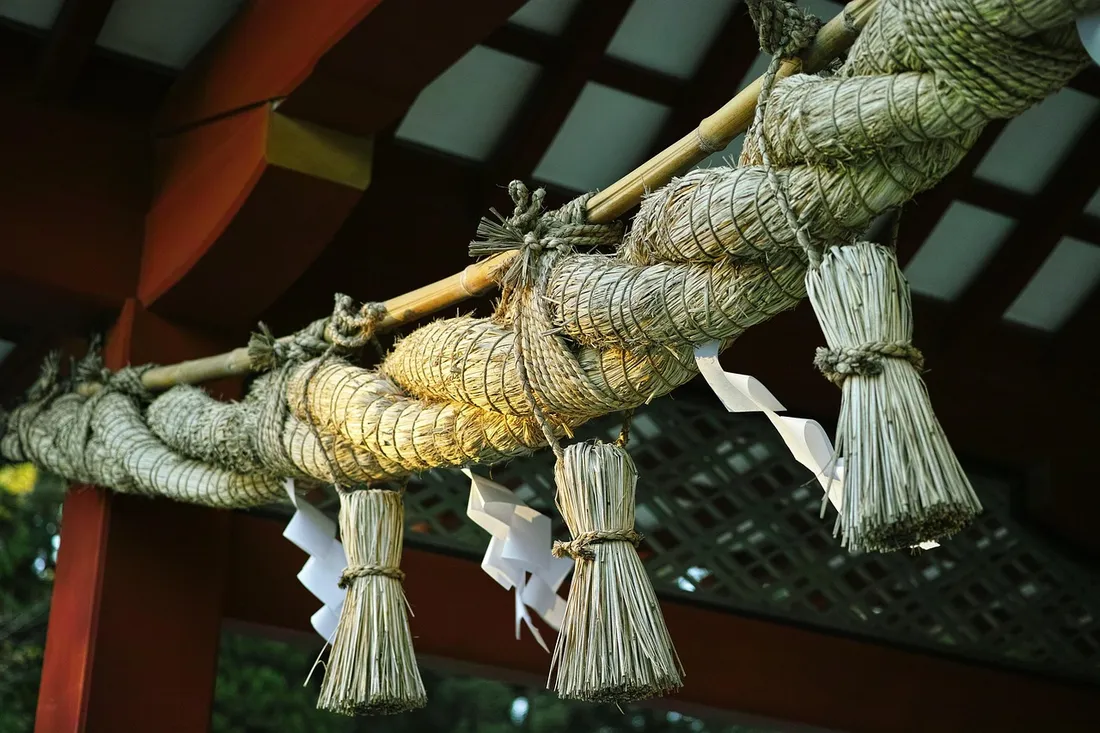
The meaning of the shimenawa & shimekazari: a sacred boundary
The shimenawa is a boundary (kekkai) marking a place clean enough to welcome the deity. Inside the shimenawa is sacred ground, set apart from the outside world - the same meaning it carries strung across a shrine hall or sacred tree.
The shimekazari hung at the entrance adds lucky charms to this rope, each with its own meaning.
- Urajiro (fern): white on the underside, expressing "spotless integrity"
- Daidai (bitter orange): a pun on "generation after generation," wishing for family prosperity
- Yuzuriha: old leaves fall only after new ones grow, wishing for an unbroken family line
- Shide (paper streamers): folded white paper marking sacred space and warding off evil
How long to keep the shimenawa
Like the kadomatsu, the shimenawa and shimekazari are kept until the new-year period ends (January 7 in Kanto, or January 15 in parts of Kansai). After removal, burning them at a shrine dondo-yaki is the respectful way.
Some households renew the shimenawa on the household altar at year-end, separately from the New Year decorations. Disposal details are in New Year Decorations: When to Put Up & Take Down.
Regional differences in kadomatsu and shimekazari
New Year decorations are richly regional. A few examples:
- Kanto vs Kansai new-year period: removal splits between the 7th (mainly Kanto) and the 15th (parts of Kansai)
- Kyushu and Okinawa: distinctive kadomatsu and shimekazari shapes and customs appear
- Beyond the entrance: some areas hang small shimekazari in the kitchen (the fire god), water areas, and even on the car
Styles and removal timing vary by region and household. Local custom comes first.
PR — This page contains promotional content
Frequently asked questions
What does the kadomatsu mean?
It is a marker so the year deity finds the home, and a vessel on which the deity alights. Pine, bamboo and plum together express long life, vitality and good fortune.
How long is the kadomatsu kept up?
Until the new-year period ends: January 7 in most areas, January 15 in parts of Kansai.
What does the shimenawa mean?
It marks a boundary showing a place is clean enough to welcome the deity. Inside is sacred ground, set apart from the outside world.
How long is the shimenawa kept up?
Like the kadomatsu, until the new-year period ends (January 7 in Kanto, 15 in parts of Kansai). After removal, a shrine dondo-yaki is the respectful way to retire it.
What do the daidai and urajiro on a shimekazari mean?
The daidai puns on "generation after generation" for prosperity; the urajiro, white on its underside, expresses integrity. The yuzuriha wishes for an unbroken family line.