
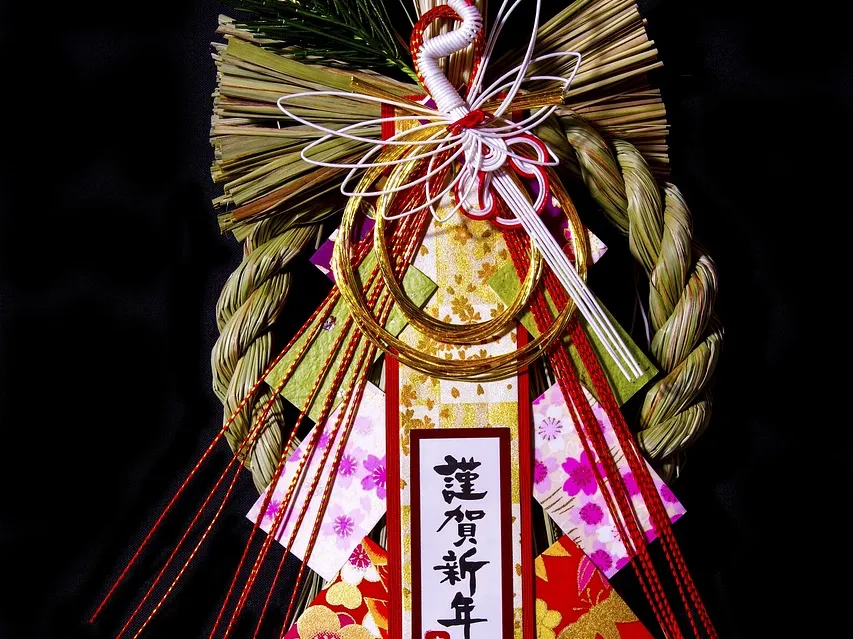
In short: put up by the 28th, take down within the new-year period
Put up New Year decorations by December 28. Avoid the 29th (double suffering) and the 31st (one-night decorating). Take them down when the new-year period ends: January 7 (or 15 in parts of Kansai). Only the kagami mochi stays until kagami biraki (January 11, or 15 in Kansai).
New Year decorations are a marker and a vessel (yorishiro) for welcoming the toshigami-sama, the deity who brings the new year's fortune. That is why there are old rules for when to put them up and how long to keep them.
When to put them up: the 13th to the 28th
You may start decorating from the start of new year preparations, December 13. Most households do it on the 26th to 28th, after Christmas. The 28th, with its "8" (a widening, fortunate shape), is considered especially auspicious.
| Date | OK to decorate? | Reason |
|---|---|---|
| December 13-28 | Best | After the start of prep; the 28th is especially lucky |
| December 29 | No | Evokes "double suffering" / "waiting in suffering" |
| December 30 | Acceptable | Some treat it as the old month-end ("one-night"); varies by area |
| December 31 | No | "One-night decorating," seen as disrespectfully rushed |
The proper flow is to cleanse the home first. Manage the timing with the Year-End Prep Countdown.
When to take them down: matsunouchi vs kagami mochi
Removal timing differs for kadomatsu / shimenawa / shimekazari and for the kagami mochi.
- Kadomatsu, shimenawa, shimekazari: take down when the new-year period ends - January 7 in most areas, January 15 in parts of Kansai
- Kagami mochi: separate from the new-year period, keep it until kagami biraki (January 11 mainly, or 15 in Kansai), then open and eat it
"Matsunouchi" is the period the year deity stays in the home. The meanings of the kadomatsu and shimenawa are in Kadomatsu & Shimenawa, and kagami biraki is covered in Kagami Mochi & Kagami Biraki.
Disposing of decorations after use
The most respectful way to retire decorations is a shrine dondo-yaki (sagicho) bonfire, held around January 15, which burns decorations and charms to see off the year deity.
- Take to a dondo-yaki: check your local shrine's date. Remove plastics and metal fittings before bringing them
- Disposing at home: place the decorations on newspaper, sprinkle salt to purify, then wrap and put out separately from other rubbish
- Kagami mochi: keep it separate; the proper form is to finish it at kagami biraki. Do not cut it with a blade - break it or pull it apart by hand
Sorting rules vary by municipality. Follow your local guidelines.
PR — This page contains promotional content
Frequently asked questions
When should New Year decorations go up?
Any time from December 13, the start of new year preparations. Many put them up on the 26th-28th after Christmas, and the 28th is considered especially lucky.
Why avoid the 29th and 31st?
The 29th evokes "double suffering," and the 31st is "one-night decorating," seen as too last-minute to welcome the deity. Decorate by the 28th, or on the 30th.
When are decorations taken down?
Kadomatsu and shimenawa come down when the new-year period ends (January 7 in most areas, 15 in parts of Kansai). The kagami mochi stays until kagami biraki.
Can I put up decorations in an apartment?
Yes - hang a shimekazari on the outside of the door, or place one inside or on the shoe cabinet. Check any rules for shared areas.
Can I reuse decorations each year?
Traditionally they are bought new to welcome the deity and retired that year. That said, many now choose reusable modern shimekazari.