
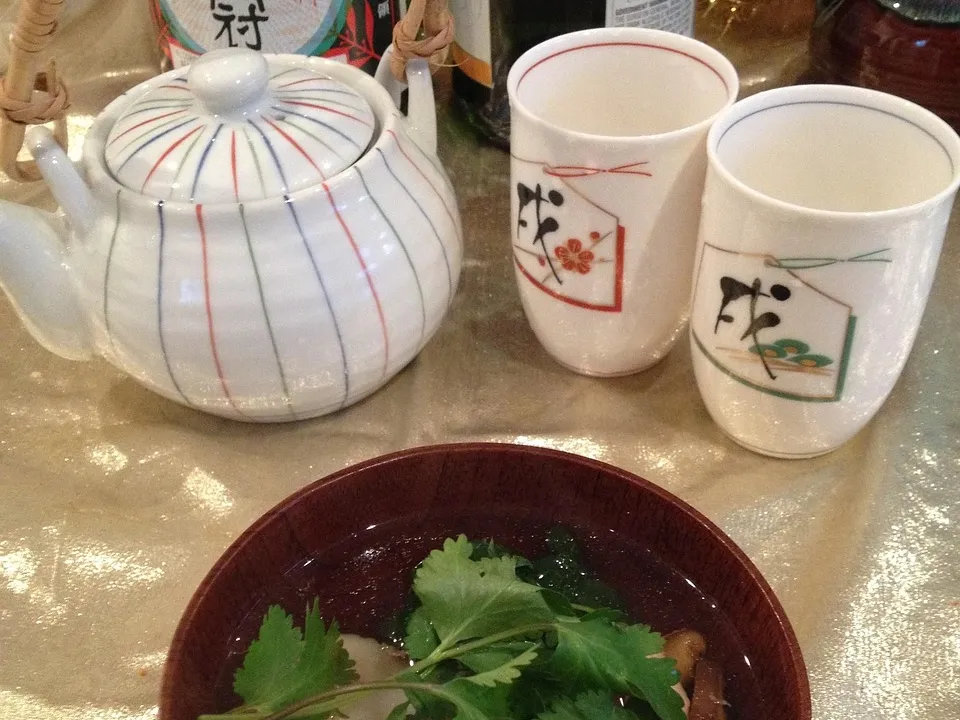
Ozoni is mochi shape times broth
No New Year dish varies more by region than ozoni. Broadly, each area's style is set by the mochi shape (square or round) crossed with the broth (clear, white miso or sweet red bean).
- The mochi line: roughly around Sekigahara in Gifu, the east uses square (cut) mochi, the west round mochi. Many areas grill square mochi and simmer round mochi
- The broth: nationwide, a clear (sumashi) bonito-kelp broth is most common; the Kansai region favours white miso; parts of Tottori and Shimane have a distinctive sweet red-bean ozoni
At root, ozoni simmers the mochi offered to the year deity with vegetables as the year's first meal - which is why it absorbed each region's food culture. On the origins of mochi, see also Kagami Mochi & Kagami Biraki.
Ozoni by region
| Region | Mochi | Broth & notes |
|---|---|---|
| Kanto | Square, grilled | Clear. Chicken, komatsuna, fish cake. An Edo pun on "na" (greens = making a name) |
| Kansai | Round, simmered | White miso. Taro, daikon and carrot cut round to "not create sharp corners" |
| Kyoto | Round, simmered | Rich white miso. Head taro for the wish to "become a leader" |
| Kagawa (Sanuki) | Round, bean-paste-filled, simmered | White miso with sweet-bean-filled mochi - a unique meeting of sweet and savoury |
| Shimane (Izumo), Tottori | Round | Some areas serve a sweet red-bean (zenzai-style) ozoni |
| Hakata (Fukuoka) | Round, simmered | Clear flying-fish (ago) broth, with yellowtail and katsuo-na - a lavish version |
| Iwate, Miyagi | Square, grilled | Some coat the mochi in a walnut sauce ("kurumi zoni") |
Even within one prefecture, styles differ by area and household. "Our family's ozoni" is the right answer.
Basic recipes (serves 2)
Kanto-style clear ozoni
- 400 ml dashi (bonito-kelp); season with 2 tsp soy sauce and a little mirin and salt
- Simmer bite-size chicken thigh with julienned daikon and carrot
- Grill square mochi in a fish grill or toaster until browned
- Add mochi to the bowl, ladle over soup and vegetables, top with komatsuna, fish cake, mitsuba and yuzu peel
Kansai-style white-miso ozoni
- Dissolve 3-4 tbsp white miso in 400 ml dashi (sweeter is authentic)
- Round-cut and parboil taro, daikon and carrot
- Simmer round mochi until soft (do not grill)
- Serve topped with bonito shavings or a dab of Japanese mustard
Eating mochi safely: choking risk
Every New Year, mochi is a leading cause of choking incidents. The basics are to cut it small, chew well, and moisten your throat with soup as you eat. With elderly people or small children present, take extra care:
- Cut mochi into roughly 1 cm pieces before adding it to the bowl
- Sip tea or soup first to moisten the throat before eating
- Do not look away during the meal; avoid distracted eating while talking
- Know the "back blows" first-aid method as a family in case of choking
This is general information only. If choking on mochi is suspected, do not hesitate to call 119 (emergency services in Japan).
PR — This page contains promotional content
Frequently asked questions
Where is the square/round mochi boundary?
Roughly around Sekigahara in Gifu. Eastern Japan uses square (cut) mochi, western Japan round mochi; near the border, some areas use both.
Why is Kansai ozoni white miso?
It reflects the court culture centred on Kyoto. The sweet, mellow taste of white miso is also linked to a wish to "spend the year in harmony."
Grill or simmer the mochi?
Many areas grill square mochi before adding it and simmer round mochi. But household preference matters a lot, and there is no fixed rule.
Is it true some regions add bean-paste-filled mochi?
Yes - Kagawa's "an-mochi zoni" is famous: sweet-bean-filled round mochi in a white miso broth, a distinctive meeting of sweet and savoury.
How can I prevent mochi choking?
Cut it small, chew well, and moisten the throat with soup or tea as you eat. With elderly people or young children, never look away.