
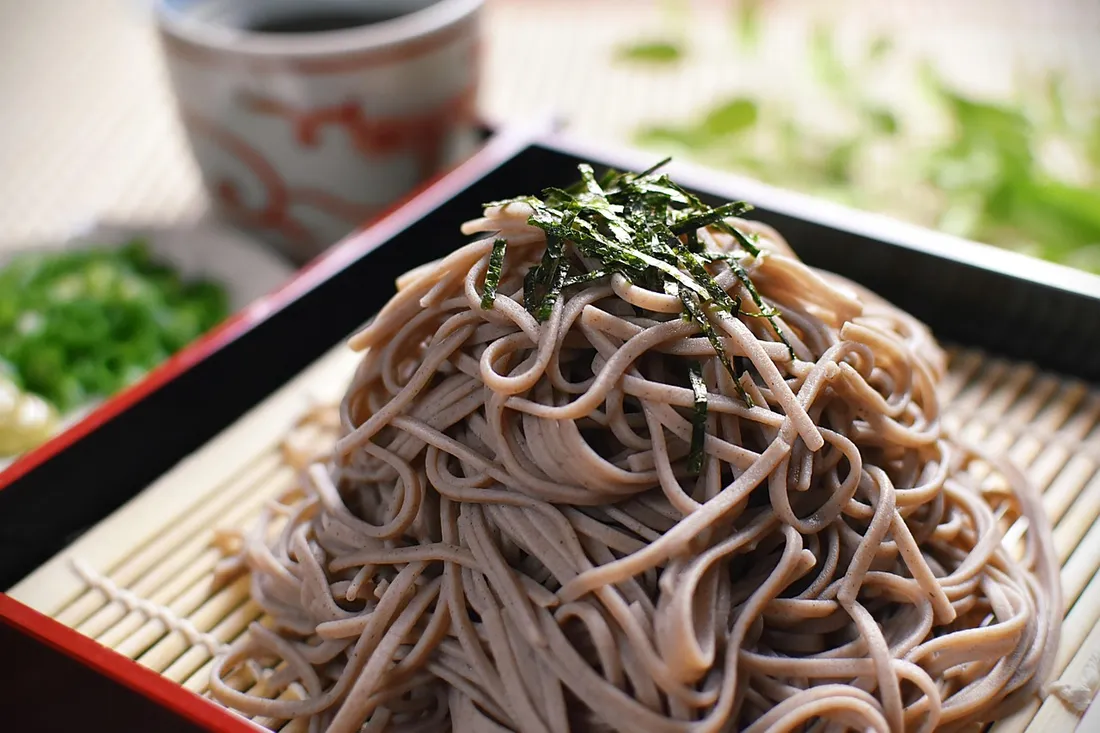
When do you eat toshikoshi soba?
Toshikoshi soba is eaten - and finished - during New Year's Eve (December 31). There is no set time: have it for dinner, or late while listening to the temple bells. But leaving it unfinished into the new year is considered unlucky, so finish before midnight.
When to eat it varies by region and household: some at dinner, some late while watching the year-end shows, some just before the year turns. As long as it is "during New Year's Eve," the rest is up to you.
Some areas, such as parts of Niigata, eat it on January 1 or Koshogatsu (the "fourteenth-day soba").
The meaning behind toshikoshi soba
The custom of eating soba on New Year's Eve is said to date to the Edo period, layering several wishes:
- Thin and long: like the noodles, to "live thin and long," a wish for long life and health
- Easily cut: soba breaks easily, so it "cuts off the year's misfortune and hardship"
- Fortune: goldsmiths gathered scattered gold dust with soba flour, making it a charm to "gather money"
- Resilience: soba recovers after wind and rain flatten it, a wish for a healthy year ahead
Toppings vary by region and taste: prawn tempura (long life), herring (Kansai's nishin soba), fried tofu, and spring onion are classics. On the origin of the ozoni eaten in the new year, see Ozoni: Regional Styles & Recipes.
How to spend New Year's Eve
New Year's Eve is a day to finish the household preparations and greet the new year calmly. It looks different for everyone; here are some classics by setting.
As a family
Gather around toshikoshi soba and relax with the year-end TV programmes. Do a final check of decorations and kagami mochi with the kids, or get the next morning's osechi and ozoni ready.
As a couple
A countdown event, or a "two-year visit" to a nearby shrine (praying on New Year's Eve night and again on New Year's Day) are popular. So is a quiet evening at home with home cooking and a drink, looking back on the year.
Solo
A "quiet New Year's Eve" writing out the year's reflections and next year's goals works well. Order in your favourite toshikoshi soba, or relax with a film or a game - the joy of a solo eve is going at your own pace.
Customs unique to New Year's Eve
- Joya no kane: on New Year's Eve night, temple bells are rung 108 times - said to be the number of human desires, cleared one by one to greet the new year
- Two-year visit: worshipping on New Year's Eve night and again on New Year's Day - a form of hatsumode that also spreads out the crowds
- The year's bath: the New Year's Eve bath, washing off the year's grime to greet the new year clean
- The final sweep: since cleaning on New Year's Day is said to "sweep out good fortune," finish cleaning by New Year's Eve (Year-End Cleaning: How-To)
To manage year-end tasks by deadline, see the Year-End Prep Countdown.
PR — This page contains promotional content
Frequently asked questions
When do you eat toshikoshi soba?
During New Year's Eve (December 31), finishing before midnight. Dinner or late at night are both fine, but leaving it into the new year is considered unlucky.
What does toshikoshi soba mean?
The main wishes are "live thin and long" for longevity, and "cut off the year's misfortune," since soba breaks easily. Fortune and resilience are also cited.
What happens if you leave toshikoshi soba unfinished?
It is said to bring poor luck with money or to carry hardship into the next year. It is only a saying, but preparing an amount you can finish is wise.
Why is the joya bell rung 108 times?
108 is said to be the number of human desires; the bell clears them one by one so you greet the new year with a clear heart. Many temples ring it across the turn of the year.
Should you avoid cleaning on New Year's Eve?
It is New Year's Day cleaning that is avoided, as it "sweeps out good fortune." Finish cleaning by New Year's Eve and relax on the 1st.